Portico di Ottavia
Save this spot to your dashboard, build trip lists, and get notified when new local guides recommend nearby places.
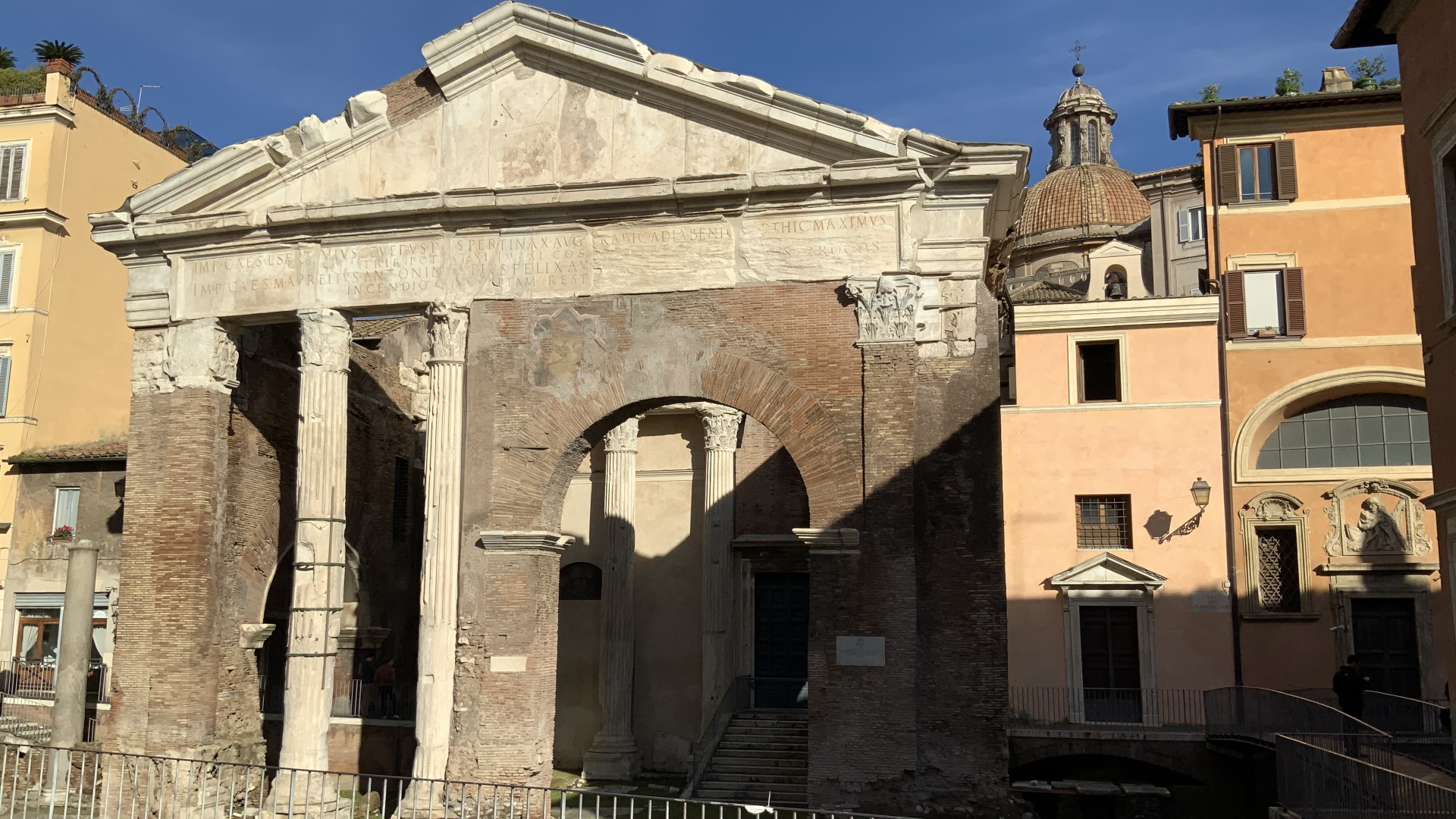
Like most monuments in Rome, this one has a layered history. A portico (or ‘porch’ for a loose translation; read more here regarding the architectural meaning) was built by a wealthy Roman conqueror named Cecilius Metellus in the 2nd century BCE. It was more famously rebuilt by the Emperor Augustus sometime after he came to power as Rome’s first (official) emperor in 27 BCE, after the death of his great uncle Julius Caesar. Augustus dedicated the structure to his sister, Octavia Minor, hence the name it bears today. This ancient portico once contained two temples (dedicated to Jupiter Stator and Juno Regina) and Octavia herself built a library within the complex. Here is an image of a reconstruction with the two temples inside.
In the medieval period the structure took on a different purpose and was used as a fish market; it had this function through the end of the 19th century. In fact, when you walk up under the portico, which you can and should do, you will notice the façade of what looks like a church. It is, in fact, a church named Sant'Angelo in Pescheria that was built in the 8th century CE. ‘In Pescheria’ translates to ‘in the fish market’ because of its location. Thus, this ‘spot’ has eclectic elements built into its own unique palimpsest, in the context of the larger palimpsest of Rome.
There is a plaque just beside the Portico that speaks to the horror of the Jews of Rome captured by the Gestapo during the Holocaust. Although the text is Italian, you will notice the date 16 Ottobre 1943 in the first line. Of the 1,259 people deported to the Auschwitz-Birkenau death camps only 16 people returned.
Community Photos
No photos yet. Be the first to contribute!
Coliseum, Roman Forum & Titus Arch
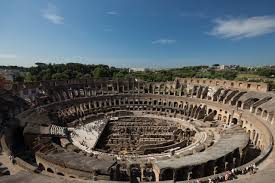
The Colosseum is an elliptical amphitheatre in the centre of the city of Rome, Italy, just east of the Roman Forum. It is the largest ancient amphitheatre ever built, and is still the largest standing amphitheatre in the world, despite its age. Positioned on the northern summit of the Palatine, the Arch of Titus (Arcus Titi) is a triumphal arch that commemorates the victory of the emperors Vespasian and Titus in Judea in 70 CE, which lead to the conquest of Jerusalem and the destruction of the Jewish temple there, and the triumphal procession the two held in Rome in 71 CE. For centuries the Jews of Rome have always refused to pass under the Arch. When the State of Israel was born the whole community of Rome ran up to the Forum to pass through the Arch, then with a different feeling. Jews have a profound and painful connection to the Roman Colosseum, as it was funded by the spoils taken from the Second Temple in Jerusalem after the First Jewish-Roman War and built by thousands of Jewish slaves. The massive amphitheater, a symbol of Roman conquest, hosted violent spectacles that involved Jewish captives and was seen as a source of suffering and martyrdom for many. The memory of this connection is often emphasized in the broader history of the Jewish community in Rome, though the Colosseum itself is now often viewed as a symbol of Christian martyrdom.
Submitted by LR · Aug 21, 2025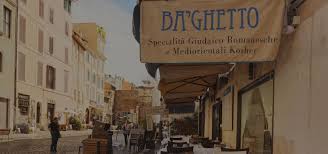
Ba' Ghetto Kosher Restaurant
the oldest jewish restaurant in Rome. A fusion of jewish, roman and middle-east culinary preparation, with a strict attention to the kasherut rules. Three locations in Rome: Via del Portico D’Ottavia 57 +39 06 68892868 Su'Ghetto Via del Portico D’Ottavia 1/C +39 06 68805605 Ba'Ghetto Milky Via del Portico d’Ottavia 2/A +39 06 68300077
Submitted by LR · Aug 21, 2025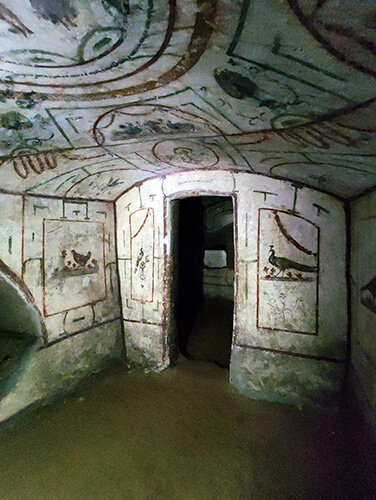
Jewish Catacombs
The earliest Jewish burial sites in Rome were the catacombs. Five have survived to the present day: Villa Toorlonia on Via Nomentana, Vigna Apollomi on Via Labicana, Vina Cimarra and Vigna Raandanini on Via Appia, and Monteverde on Via Portuense. Today, only the cataacombs in Villa Torlonia and Vigna Randanini can be visited, though with some difficulty. Vigna Randanini can be visited once a month. Dating from the second and fourth centuries AD, the catacombs were discovered in 1800 and extend over an area of approximately 18,000 m². The galleries of the complex are articulated on two levels, for a length of about 700 meters. The plan, very irregular and without a unitary plan of the sepulchral area, suggests a development in successive phases. Inside there are various types of burials, the most characteristic of which are those of Phoenician origin known as Kôchim or multi-storey oven tombs. There are also tombs dug into the floor. Some rooms are frescoed with typical subjects of the Jewish religion such as the ark of the law and the menorah, that is, the seven-branched candelabra, others with floral motifs and depictions of animals. The main tunnels of the Via Appia Randanini catacombs have burial crypts, stacked three and four high like railroad berths, along both walls. Off the main corridors are family crypts, rooms in which the more prosperous among Rome’s Jews reserved space. Some of the family chambers have elaborate decoration: menorahs, palm trees, along with inscriptions in Greek, the lingua franca of early Roman Jewry. The catacombs can only be visited with aa guide. In visiting the Jewish Catacombs of Rome you will be taken back to 22 centuries ago, when Jews moved to Rome and needed a land to bury their people. Through these findings, we can discover and understand the life of the first Jews in Rome, their cultural practices, and their social organization.
Submitted by LR · Aug 21, 2025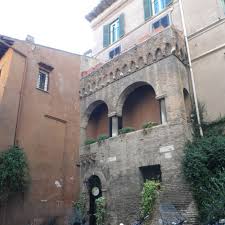
Ancient Synagogue of Trastevere
For a long time, Trastevere was the focal point of the Jewish community in Rome. Then, in the Middle Ages, it gradually shifted to the Sant’Angelo District, where the ghetto was later built. The building at 14, Vicolo dell’Atleta is commonly identified as the site of the old medieval synagogue in the Trastevere area. The building has a brick façade with a wide two arched loggia, surmounted by a cornice with small arches resting on ledges. The column of the loggia bears an inscription in Hebrew with the name Nathan Hai. This might refer to Rabbi Nathan ben Jehiel, who is thought to have had a mikveh or ritual bath and a synagogue built in Trastevere in the late 11th and early 12th centuries. One of the best-known works by Rabbi Nathan ben Jehiel is his Sefer Ha‘Arukh (literally ordered [words]), a Talmudic dictionary of great importance within sacred literature. Trastevere, and precisely the area between the Isola Tiberina, the Basilica of Santa Cecilia and the Church of San Francesco a Ripa, was the focal point of the community around the year 1000. This Giudecca – as the neighborhoods inhabited by Jews were referred to in the Middle Ages – is also witnessed in the street names of the time, which included, for example, the street “de corte Judei” and the “pons Judaeorum”, i.e. Pons Fabricius. Seven synagogues were built in the Rione: the beautiful medieval house along the alleyway, with a graceful arched loggia surmounted by a cornice, is all that remains of one of them. On a column of this little brick jewel are still visible some Hebrew characters that should be read as “Nathan Chay”, a reference to the lexicographer Nathan ben Yehiel, a member of one of Rome’s most prominent Jewish families, who had founded the synagogue in the late 11th century. Inside the building are still the remains of the ancient Mikweh, the basin for ritual bathing, and at an even lower level runs a vein of water, accessible via a well. As for the palm trees that gave the alley its name, they were brought here by the community: depicted on the door of Solomon’s Temple, they are one of the plants of Jewish tradition and symbolize loyalty to God.
Submitted by LR · Aug 21, 2025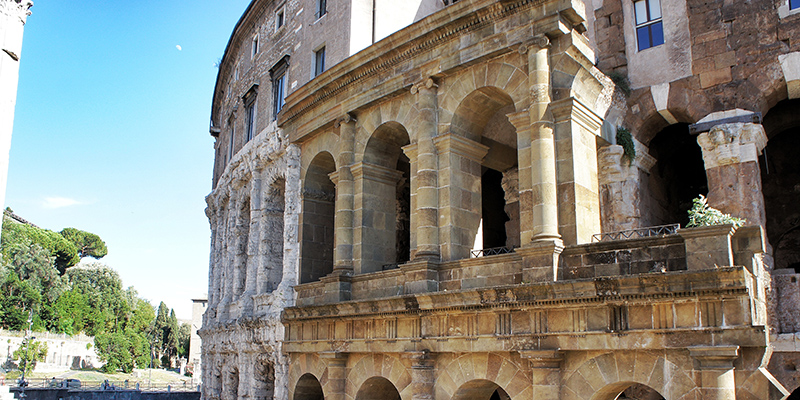
Theater Marcellus
Teatro di Marcello stands between the Ancient Rome Area and the Rome Jewish Ghetto, hence it’s also known as the Jewish Coliseum. Works to build the theater started under Julius Caesar, but the dedication occurred only under Emperor Augustus in the 13th century BC. The Theater was then named after Marcus Marcellus, Augustus’s nephew and also husband of Augustus’s only daughter, Julia. The open-air theater, which was used for acting, dancing and singing performances, originally featured 41 arches framed by 42 pillars. It was 36,60 meters in height (approximately 98 feet tall), while today it is a little bit taller than 20 meters (65 ft). Theater Marcellus could host nearly 15,000 spectators. The Theatre of Marcellus is an important exemplar of architecture in the Italian capital. It is the only stone theatre dating back to ancient Rome of which significant traces remain today.
No Website
Submitted by LR · Aug 21, 2025
Kosher Delight Guest House
Kosher Delight Guest House is a Bed & Breakfast located in Rome a few steps from the beautiful Old Town. Located in the immediacy of some synagogues and kosher restaurants, is well connected with many points of interest in the city. Designed in a simple and modern style, Kosher Delight Guest House, offering its guests a wonderful stay pleasant and
Submitted by LR · Aug 20, 2025
Portico di Ottavia
Among the most interesting monuments in the area of the former Jewish ghetto in Rome is the Portico d’Ottavia, an ancient structure dating back to the 2nd century. The colonnaded walks of the portico enclosed the Temples of Juno Regina (north) and Jupiter Stator (south), as well as a library. Like most monuments in Rome, this one has a layered history. A portico (or ‘porch’ for a loose translation; read more here regarding the architectural meaning) was built by a wealthy Roman conqueror named Cecilius Metellus in the 2nd century BCE. It was more famously rebuilt by the Emperor Augustus sometime after he came to power as Rome’s first (official) emperor in 27 BCE, after the death of his great uncle Julius Caesar. Augustus dedicated the structure to his sister, Octavia Minor, hence the name it bears today. This ancient portico once contained two temples (dedicated to Jupiter Stator and Juno Regina) and Octavia herself built a library within the complex. Here is an image of a reconstruction with the two temples inside. In the medieval period the structure took on a different purpose and was used as a fish market; it had this function through the end of the 19th century. In fact, when you walk up under the portico, which you can and should do, you will notice the façade of what looks like a church. It is, in fact, a church named Sant'Angelo in Pescheria that was built in the 8th century CE. ‘In Pescheria’ translates to ‘in the fish market’ because of its location. Thus, this ‘spot’ has eclectic elements built into its own unique palimpsest, in the context of the larger palimpsest of Rome. There is a plaque just beside the Portico that speaks to the horror of the Jews of Rome captured by the Gestapo during the Holocaust. Although the text is Italian, you will notice the date 16 Ottobre 1943 in the first line. Of the 1,259 people deported to the Auschwitz-Birkenau death camps only 16 people returned.
Submitted by LR · Aug 20, 2025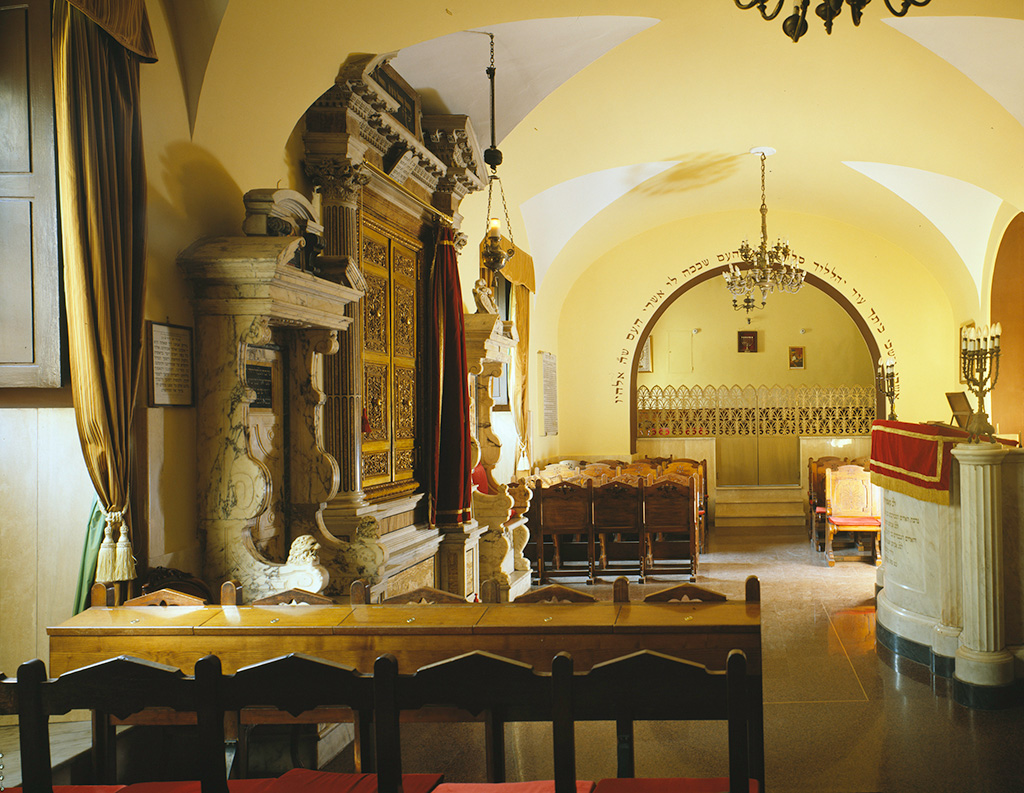
Spanish Synagogue / Tempio Spagnolo of Rome
A small Sephardic (Spanish) rite temple is in the basement of the Tempio Maggiore. This is a legacy of the ghetto’s Scole, where versions of this rite were observed. Originally located elsewhere, it was transferred here in 1932. The furnishings of the Cinque Scole were restored and brought here In 1948. The hall has an elongated rectangular shape and the bi-focal layout of the Ghetto Scole: the aron and tevah face each other at the centre of opposite walls – in this case along the longer sides -, while the pews are arranged to face them. The aron in polychrome marble comes from Scola Nova; the original tympanum had to be removed because of the height of the ceiling, and at its sides the seats belonging to the tripartite structure of the aron from Scola Catalana made between 1622 and 1628. The tevah comes from the Scola Castigliana: it was donated in 1851, and is the last, large marble item purposely made for the Cinque Scole.At the end of the nineteenth century, the Jewish Community of Rome wanted to replace the Ghetto’s five ancient synagogues (Cinque Scole) with a monumental one. The community intended to reserve an oratory for the Spanish rite, officiated in Rome at least since 1492, with the arrival of the Jews expelled from Spain. In 1932 the Spanish Synagogue was placed inside the Great Synagogue monumental building. In 1948 it was embellished with the marble furnishings belonging to the Cinque Scole, thus recreating the ghetto’s ancient synagogues atmosphere with their splendid marbles and fabrics. Winter hours from October 1st to October 25th Sunday – Thursday: from 10 am to 5.00 pm (last admission at 16.15 pm) Friday: from 9 am to 2 pm (last admission at 1.15 pm) from October 27th to November 8th and from January 12th to February 8th Sunday – Thursday: from 10 am to 4.30 pm (last admission at 15.45 pm) Friday: from 9 am to 2 pm (last admission at 1.15 pm) from November 10th to January 10th Sunday – Thursday: from 10:00 am to 4:00 pm (last admission at 15.15 pm) Friday: from 9 am to 2 pm (last admission at 13.15 pm) from January 9th to March 31th Sunday – Thursday: from 10:00 am to 7:00 pm (last admission at 16.45 pm) Friday: from 9 am to 2 pm (last admission at 13.15 pm) Summer opening hours from April 1st to September 30th Sunday – Thursday: from 10.00 am to 6.00 pm (last admission at 5.15 pm) Friday: from 10 am to 4 pm (last admission at 3.15 pm)
Submitted by LR · Aug 19, 2025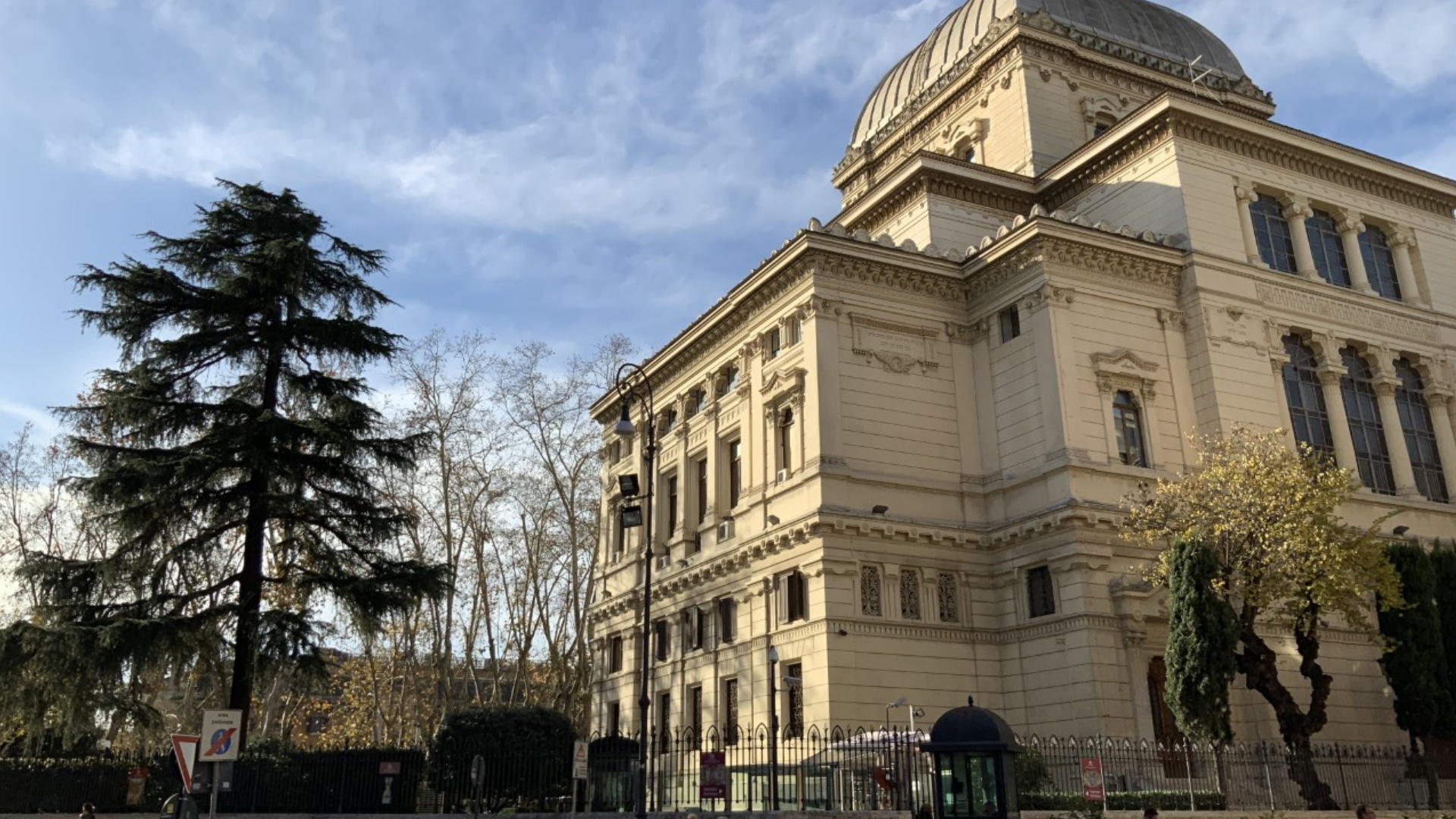
Tempio Maggiore, Great Synagogue
Tempio Maggiore, the Great Synagogue, was inaugurated in grand style becoming a cultural reference point for the entire Jewish community of Rome in 1904. In the nineteenth century the Jews of Italy reached full emancipation and equal civil rights. From then, the Jewish communities were able to erect, after centuries of limitations, their monumental synagogues. In Rome, the Jews decided to build the most impressive synagogue possible: the Great Synagogue, in the same neighborhood where, for centuries, they used to be locked up, the former ghetto which had been demolished and reclaimed. The monumental building is surmounted by a square-based dome, which is covered in aluminum. The interior, with its bimah (pulpit) placed in a way that does not exactly conform to the tradition of the “Roman rite”, is richly decorated in art nouveau style. Winter opening hours from October 1st to October 25th Sunday – Thursday: from 10 am to 5.00 pm (last admission at 16.15 pm) Friday: from 9 am to 2 pm (last admission at 1.15 pm) from October 27th to November 8th and from January 12th to February 8th Sunday – Thursday: from 10 am to 4.30 pm (last admission at 15.45 pm) Friday: from 9 am to 2 pm (last admission at 1.15 pm) from November 10th to January 10th Sunday – Thursday: from 10:00 am to 4:00 pm (last admission at 15.15 pm) Friday: from 9 am to 2 pm (last admission at 13.15 pm) from January 9th to March 31th Sunday – Thursday: from 10:00 am to 7:00 pm (last admission at 16.45 pm) Friday: from 9 am to 2 pm (last admission at 13.15 pm) Summer opening hours from April 1st to September 30th Sunday – Thursday: from 10.00 am to 6.00 pm (last admission at 5.15 pm) Friday: from 10 am to 4 pm (last admission at 3.15 pm)
Submitted by LR · Aug 19, 2025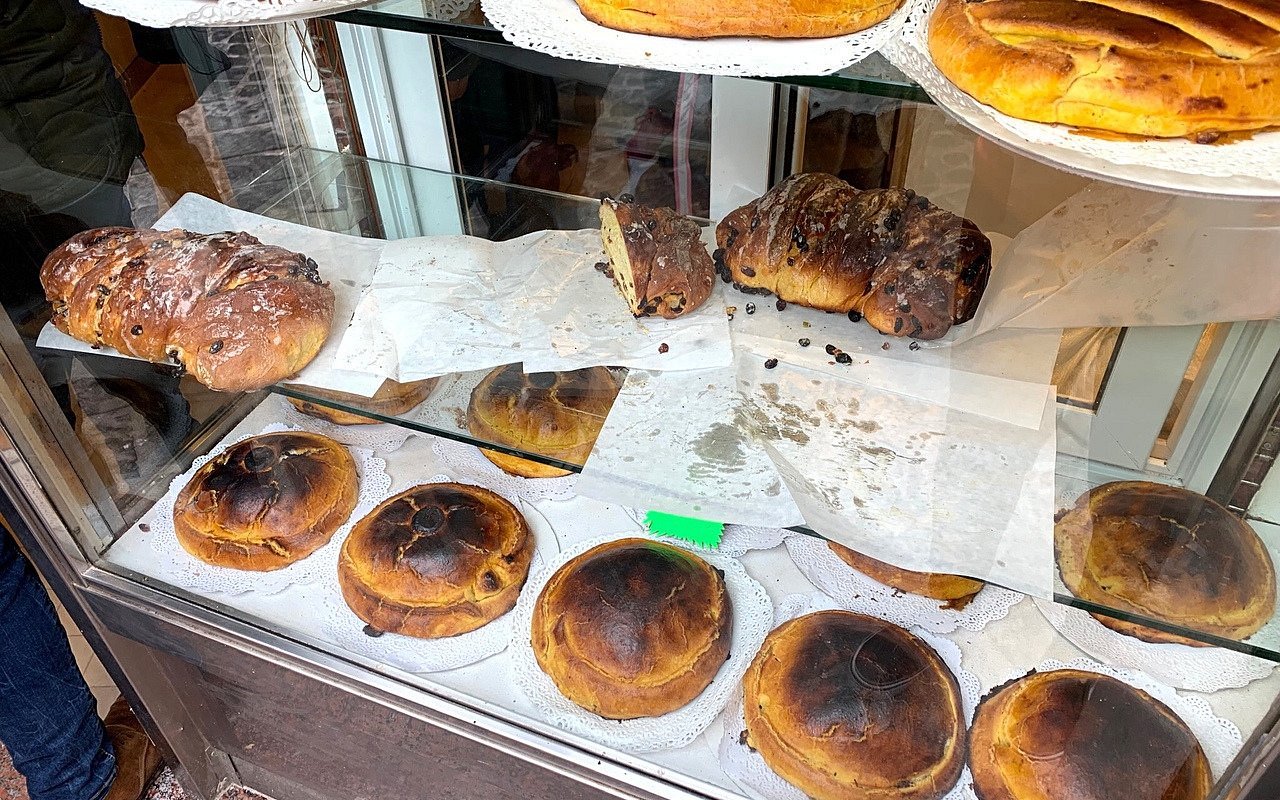
Pasticceria Boccione - Kosher Bakery
Located in Rome's Jewish ghetto, Pasticceria Boccione is a 200-year-old kosher bakery that is beloved by locals for its delicious treats and fascinating history. Established in 1815, this family-run bakery is the oldest surviving bakery in the area and renowned for its specialties such as crostata made with ricotta and wild cherry filling, and pizza ebraica, a crunchy cookie studded with dried fruits and nuts. Though traditionally hidden under a blackened crust to avert papal decrees, it is now incredibly popular among all sorts of sweet tooths. The bakery sells out fast in the mornings so be sure to set your alarm, follow the aroma of carmelizing sugars, and join the line of hungry fans for the ultimate local experience.A Roman taste experience not to miss. Vegetarian-friendly; kosher
Submitted by LR · Aug 19, 2025