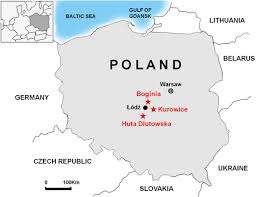
Lodz is the third-largest city in Poland located approximately 85 miles south of Warsaw.
Jews began settling Lodz in the late 1700’s. In 1793, there were 11 Jews living in Lodz. This number increased, by 1809 (while under Prussian Rule), to about 100 and to 259 in 1820. At that time, the Jewish community began to be organized and had built a synagogue. A cemetery was opened from 1811 until 1892, unfortunately it was destroyed in World War II.
Lodz was Poland's textile center and many Jews worked within this prosperous industry.
In Lodz, members of the Polish, German, Jewish and Russian cultures worked and lived together harmoniously at the time of the Industrial Revolution.
Lodz was the second largest city in Poland before World War II. On the eve of the war, it maintained a population of 665,000, 34% (about 233,000) of whom were Jewish. Lodz also had a sizable German minority, amounting to 10% of the overall population. Lodz was Poland's textile center and many Jews worked within this industry. Jewish families owned 175 factories, including the I. K. Poznański factory, one of the largest garment factories in Europe.
Prior to World War II, the Jewish population of Lodz numbered about 233,000, roughly one-third of the city’s population and the second largest Jewish community in Europe.
At the outbreak of the War, many Jews left the city, in fear of persecution, to settle in Warsaw and other cities in the General Government or to the territories occupied by the USSR.
Despite the devastation of the Holocaust, a small Jewish community continues to exist in Łódź today.