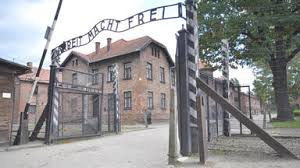
KL Auschwitz was the largest of the German Nazi concentration camps and extermination centers. Over 1.1 million men, women and children lost their lives here.
The Auschwitz-Birkenau State Museum was created by an act of the Polish parliament on July 2, 1947, and includes the grounds of two extant parts of the Auschwitz I and Auschwitz II-Birkenau concentration camps.
The Museum grounds cover 191 hectares, of which 20 are at Auschwitz I and 171 at Auschwitz II-Birkenau. On the museum grounds stand several hundred camp buildings and ruins, including the ruins of the gas chambers and crematoria, over a dozen kilometers of camp fence, camp roads, and the railroad spur ("ramp") at Birkenau. In 1979, the site of Auschwitz-Birkenau concentration camp was entered on the UNESCO international list of world heritage sites.
Admission to the grounds of the Auschwitz-Birkenau Memorial is free of charge. The entry cards should be reserved on visit.auschwitz.org. For better understanding the history of Auschwitz, a visit with a guide-educator is highly recommended.
Hours
hours
The Museum is open all year long, seven days a week, except January 1, December 25, and Easter Sunday:
7:30 AM - 2:00 PM December
7:30 AM - 3:00 PM January, November
7:30 AM - 4:00 PM February
7:30 AM - 5:00 PM March, October
7:30 AM - 6:00 PM April, May, September
7:30 AM - 7:00 PM June, July, August
* These are the hours of entrance to the Museum. A visitor may stay on the site of the Museum 90 minutes after the last entrance hour (i.e. 5.30 in February or 8.30 in July)